







Biopower
In working towards the adoption of biomass conversion to electricity as a New Jersey Class I renewable energy source, New Jersey’s Clean Energy Program has been providing financial incentives and registration for renewable energy certificates (RECs) to biopower projects built in New Jersey since 2002.
Please note that starting with fiscal year 2017, biopower projects will be incentivized through the Combined Heat and Power (CHP) Program.
Some of the biopower projects that have received incentives in recent years include those at wastewater treatment plants that generate electricity and thermal energy from the biogas produced by the anaerobic digestion of sewage sludge, and those at landfills where electricity is generated with the methane produced from the decay of organic materials in the landfills. Projects generating electricity from certain types of wood waste, sustainably grown energy crops, or agricultural waste from crops or livestock may also be eligible for incentives
Benefits of Biopower
- Turns waste into resources
- Provides a renewable source of electricity
- Reduces use of fossil fuels
- Promotes biopower industries
Information on previous biopower offerings can be found here.
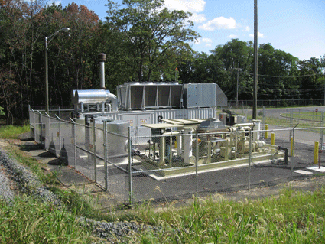
Monmouth County's 1 MW sustainable biopower project produces enough energy to support their Materials Processing and Recovery Facility.